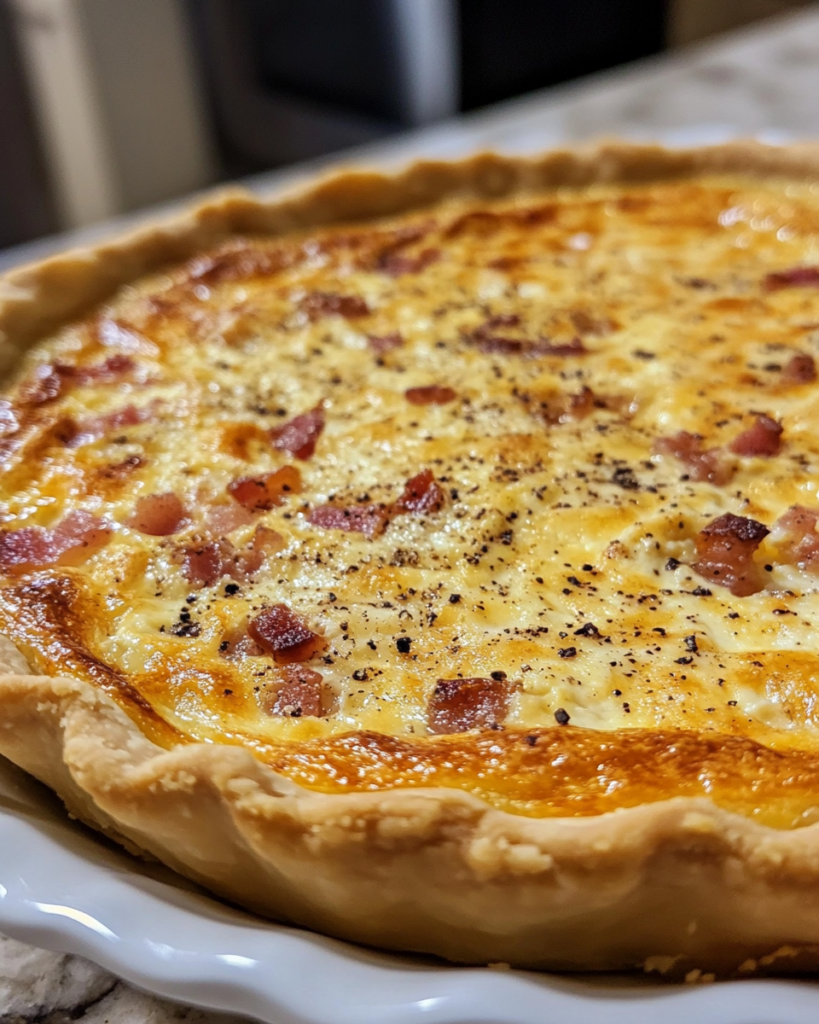
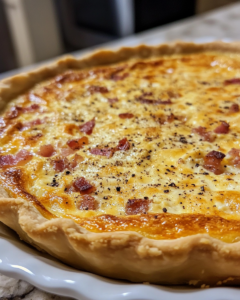
Classic French-Style Quiche is a savory tart known for its delicate custard filling and crisp, buttery pastry. This dish combines eggs, cream, and savory ingredients such as bacon, cheese, and aromatics to create a slice that is rich yet balanced. Served warm or at room temperature, it offers a tender interior with a lightly golden surface.
Originating in France, quiche has become a staple in cafés and family kitchens alike. Its appeal lies in the contrast between flaky crust and silky filling. Each bite delivers gentle saltiness from cured meat, subtle sweetness from sautéed onions, and a creamy texture that feels smooth without heaviness.
Whether prepared for brunch, lunch, or a relaxed evening meal, Classic French-Style Quiche brings refined flavor through simple ingredients handled with care.
Ingredients Overview
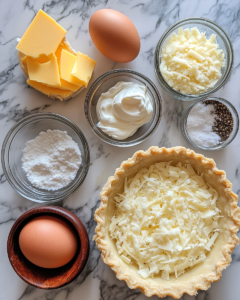
The foundation of Classic French-Style Quiche begins with pastry dough. A traditional shortcrust combines flour, cold butter, salt, and chilled water. Butter creates flakiness as it melts during baking, leaving delicate layers within the crust. Cold ingredients are essential to prevent excess gluten formation, which can lead to a tough texture.
Eggs form the structure of the custard. When gently baked, they set into a smooth filling rather than a dense scramble. Heavy cream adds richness and prevents the eggs from turning rubbery. Some cooks replace a portion of the cream with whole milk for a lighter texture, though too much milk can reduce silkiness.
Bacon or lardons bring savory depth. Their rendered fat lightly seasons the custard. If pork is not preferred, diced smoked turkey or sautéed mushrooms can provide similar character. Gruyère cheese is traditional, offering nutty flavor and reliable melt. Swiss cheese or Comté can serve as suitable alternatives.
Onions add sweetness once softened in a pan. Shallots may replace onions for a milder note. A pinch of salt, freshly ground black pepper, and a touch of grated nutmeg round out the filling without overpowering it.
Step-by-Step Instructions
Begin by preparing the crust. In a mixing bowl, combine flour and salt. Add cold, cubed butter and work it into the flour using fingertips or a pastry cutter until the mixture resembles coarse crumbs. Gradually add chilled water, stirring gently until the dough comes together. Avoid overworking, as excessive handling develops gluten and leads to toughness.
Shape the dough into a disc, wrap, and refrigerate for at least 30 minutes. Chilling relaxes the gluten and firms the butter, helping maintain flakiness during baking.
Roll the dough on a lightly floured surface into a circle large enough to line a 9-inch tart pan. Press it gently into the edges without stretching. Trim excess dough and prick the base with a fork. Place parchment paper over the crust and fill with pie weights or dried beans.
Blind bake in a preheated oven at 375°F (190°C) for about 15 minutes. Remove weights and parchment, then return the crust to the oven for an additional 5 to 7 minutes until lightly golden. This step prevents a soggy base once the custard is added.
While the crust bakes, cook the bacon in a skillet over medium heat until crisp. Transfer to paper towels to drain. Reserve a small spoonful of rendered fat and sauté chopped onions until soft and translucent. Allow both components to cool slightly.
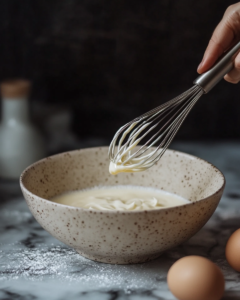
In a bowl, whisk eggs with heavy cream, salt, pepper, and a pinch of nutmeg. Whisk gently to avoid incorporating excess air, which can cause bubbles on the surface during baking.
Scatter cooked bacon, sautéed onions, and grated Gruyère evenly over the pre-baked crust. Pour the egg and cream mixture slowly into the shell, stopping just below the rim to prevent overflow.
Bake at 350°F (175°C) for 30 to 40 minutes. The center should jiggle slightly while the edges appear set. Overbaking results in cracks and a grainy texture, so remove the quiche while a slight wobble remains.
Allow it to rest for at least 15 minutes before slicing. Resting allows the custard to finish setting and makes slicing cleaner.
Tips, Variations & Substitutions
For an extra crisp crust, brush the blind-baked shell with a thin layer of beaten egg and return it briefly to the oven. This creates a barrier that reduces moisture absorption from the filling.
To create a vegetarian version, replace bacon with sautéed spinach, roasted red peppers, or caramelized leeks. Remove excess moisture from vegetables before adding them to prevent a watery custard.
For a lighter texture, substitute half of the heavy cream with whole milk. Avoid using low-fat milk alone, as it may compromise creaminess.
Herbs such as thyme or chives add subtle fragrance. A small quantity is sufficient, since too many additions can overwhelm the custard’s gentle flavor.
If short on preparation period, store-bought pastry can be used, though homemade dough typically provides superior texture.
Serving Ideas & Occasions
Classic French-Style Quiche pairs beautifully with a crisp green salad dressed in a light vinaigrette. The acidity of the dressing balances the richness of the custard. Fresh fruit on the side adds brightness and color.
For brunch gatherings, serve alongside roasted potatoes and a platter of sliced tomatoes. During cooler months, a bowl of light vegetable soup complements the tart without overwhelming it.
This dish also travels well, making it suitable for picnics or potluck events. Since it tastes pleasant at room temperature, it can be prepared earlier in the day and sliced just before serving.
Nutritional & Health Notes
Classic French-Style Quiche contains protein from eggs and dairy, along with calcium from cheese and cream. The presence of fat contributes to satiety and flavor, though portion control is helpful due to its richness.
Using whole ingredients rather than processed fillings keeps the dish straightforward and free from unnecessary additives. Including vegetables such as spinach or leeks increases fiber and micronutrient content.
Those monitoring sodium levels may reduce added salt, particularly if bacon and cheese already provide sufficient seasoning. A balanced plate with fresh greens can create a satisfying meal without excessive heaviness.
FAQs
How do I prevent a soggy crust?
A soggy crust usually results from skipping the blind-baking stage. Pre-baking the shell with weights allows the base to firm before the custard is added. Removing the weights for the final few minutes helps the bottom turn lightly golden. Another helpful technique involves brushing the warm crust with a thin layer of beaten egg and returning it briefly to the oven. This forms a light seal that reduces moisture absorption. Cooling the filling ingredients slightly before pouring them into the crust also helps maintain texture.
Can Classic French-Style Quiche be prepared in advance?
Yes, this dish holds up well when prepared earlier in the day. After baking, allow it to cool completely before covering and refrigerating. It can be served chilled, at room temperature, or gently reheated in a low oven. Reheating at a moderate temperature prevents the custard from curdling. Avoid microwaving for extended periods, as uneven heat may alter texture. Preparing it ahead can simplify hosting duties while preserving flavor and structure.
What cheese works if Gruyère is unavailable?
If Gruyère cannot be sourced, several alternatives provide similar melt and flavor. Comté offers a comparable nutty character. Emmental or Swiss cheese also perform well in custard-based dishes. For a slightly sharper taste, a mild white cheddar can be used, though it changes the traditional profile slightly. Select a cheese that melts smoothly rather than separating into oil. Grating the cheese fresh rather than using pre-shredded varieties helps maintain a creamy texture.
Why did my quiche crack on top?
Cracks typically appear when the custard is exposed to excessive heat or baked for too long. High temperatures cause eggs to tighten rapidly, forcing moisture outward and creating splits. Baking at a moderate temperature and removing the tart when the center still has a gentle wobble reduces this risk. The residual heat continues to set the custard during resting. Avoid over-whisking, as excess air can expand and contribute to surface imperfections.
Can I freeze Classic French-Style Quiche?
Freezing is possible, though texture may change slightly. Allow the baked quiche to cool completely before wrapping tightly in plastic wrap and foil. Freeze for up to two months. Thaw overnight in the refrigerator before reheating in a moderate oven until warmed through. Avoid freezing an unbaked custard in the shell, since liquid filling can affect crust integrity. Proper wrapping minimizes ice crystals and preserves flavor.
Is it possible to prepare this without a crust?
A crustless variation can be prepared by greasing a pie dish thoroughly and pouring the filling directly into it. Baking duration may be slightly shorter, so monitor carefully. Without pastry, the texture resembles a firm savory custard. This option reduces carbohydrates and simplifies preparation. Allow sufficient resting period before slicing to help maintain clean portions.
How do I know when the quiche is fully baked?
The edges should appear set and lightly golden, while the center retains a gentle jiggle similar to gelatin. Inserting a knife near the center should produce a mostly clean blade with slight moisture. If liquid appears on the surface, additional baking is required. Keep a close watch during the final minutes to prevent overbaking. Resting after removal from the oven allows residual heat to finish setting the custard evenly.
Print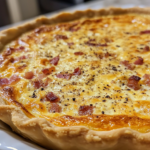
Classic French-Style Quiche features a flaky pastry crust filled with eggs, cream, bacon, onions, and Gruyère cheese. It offers a smooth custard texture balanced by savory ingredients.
Ingredients
1 9-inch unbaked pie crust
6 slices bacon, diced
1 small onion, finely chopped
1 cup grated Gruyère cheese
4 large eggs
1 cup heavy cream
1/2 cup whole milk
1/4 teaspoon salt
1/4 teaspoon freshly ground black pepper
Pinch of grated nutmeg
Instructions
-
Preheat oven to 375°F (190°C).
-
Line the pie crust with parchment and fill with weights. Blind bake for 15 minutes, then remove weights and bake 5 additional minutes.
-
Cook bacon in a skillet until crisp. Drain on paper towels.
-
Sauté chopped onion in a small amount of bacon fat until soft. Cool slightly.
-
Whisk eggs, heavy cream, milk, salt, pepper, and nutmeg until smooth.
-
Spread bacon, onion, and grated cheese evenly in the crust.
-
Pour custard mixture into the shell.
-
Reduce oven temperature to 350°F (175°C) and bake 30 to 40 minutes until center is slightly jiggly.
-
Rest for 15 minutes before slicing.