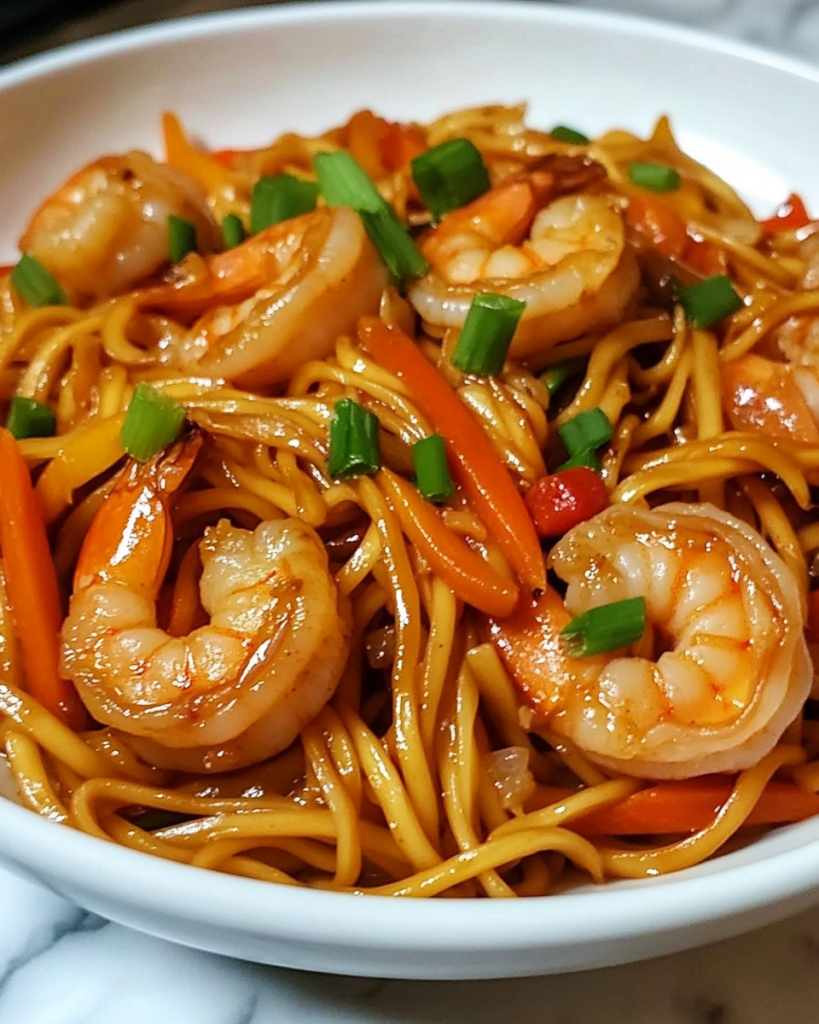
There are evenings when cooking feels like the last thing you want to do, yet the craving for something warm, savory, and satisfying refuses to be ignored. Those are the nights when Better Than Takeout Quick Shrimp Lo Mein truly shines. This dish is perfectly suited for busy weeknights, relaxed family dinners, or moments when you want comfort food without committing to hours in the kitchen. It delivers everything people love about classic lo mein—slurpable noodles, tender shrimp, crisp vegetables, and a deeply flavorful sauce—without the wait, extra cost, or uncertainty of ordering out.
The inspiration for this recipe comes from the desire to make everyday cooking feel rewarding instead of overwhelming. Lo mein has long been a familiar favorite, often associated with convenience and indulgence. Recreating it at home transforms it into something even better: fresher ingredients, balanced flavors, and complete control over what goes into your meal. This recipe is designed to be approachable, reliable, and adaptable, making it ideal for cooks of all skill levels. Once you try it, you’ll find yourself returning to it again and again, not just because it’s fast, but because it genuinely tastes amazing.
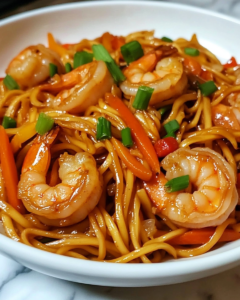
What Makes This Shrimp Lo Mein Better Than Takeout
Homemade shrimp lo mein has several advantages over restaurant versions, and speed is only one of them. While takeout can be convenient, it often comes with overly salty sauces, soggy noodles, or shrimp that are either overcooked or barely noticeable. Cooking at home allows you to strike the perfect balance between flavor, texture, and freshness.
This recipe focuses on layering flavors thoughtfully. Aromatics like garlic and ginger are cooked just long enough to release their fragrance without burning. Vegetables are stir-fried quickly to maintain their crunch and color. Shrimp are cooked separately to ensure they remain tender and juicy. Finally, everything is brought together with a well-balanced sauce that coats the noodles evenly without drowning them.
Another key benefit is flexibility. You can easily adjust this recipe to suit your preferences or what you have on hand. Add more vegetables, reduce the sauce slightly, or increase the shrimp for a protein-forward version. Because the technique is simple and forgiving, it adapts well to different tastes while maintaining its core appeal.
A Closer Look at the Ingredients
Understanding the role of each ingredient helps ensure consistent success and makes it easier to customize the dish confidently.
Noodles
-
Lo Mein Noodles – 12 ounces (340 g)
These wheat-based noodles are ideal for stir-frying. They remain tender while holding onto sauce, creating that signature lo mein texture. If lo mein noodles are unavailable, spaghetti or linguine can be used as substitutes, offering a similar chew.
Shrimp
-
Raw Shrimp – 1 pound (450 g), peeled and deveined
Shrimp are the star protein in this dish. They cook quickly and pair beautifully with savory sauces. Medium or large shrimp are best, as they provide a satisfying bite and are easier to cook evenly.
Cooking Oil and Aromatics
-
Vegetable Oil – 2 tablespoons
A neutral oil ensures clean flavor and proper stir-frying. -
Garlic – 4 cloves, minced
Adds depth and savory warmth. -
Fresh Ginger – 1 tablespoon, grated
Brings brightness and subtle heat that lifts the entire dish.
Vegetables
-
Carrots – 1 cup (120 g), julienned
Add natural sweetness and crunch. -
Bell Pepper – 1 cup (150 g), thinly sliced
Contributes mild sweetness and vibrant color. -
Snow Peas – 1 cup (100 g)
Offer crisp texture and freshness. -
Green Onions – 3 stalks, sliced
Provide a mild onion flavor and a fresh finish.
The Sauce
-
Low-Sodium Soy Sauce – 1/3 cup (80 ml)
Forms the savory base of the sauce. -
Oyster Sauce – 2 tablespoons
Adds richness and depth. -
Sesame Oil – 1 teaspoon
Enhances aroma with a nutty note. -
Brown Sugar – 1 tablespoon
Balances savory flavors with gentle sweetness. -
Cornstarch – 1 teaspoon mixed with 2 tablespoons water
Lightly thickens the sauce so it clings to the noodles.
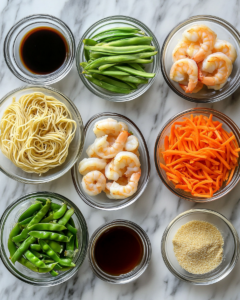
Preparing for Success Before You Start Cooking
Because this recipe comes together quickly, preparation is essential. Having everything ready before heating the pan ensures smooth cooking and prevents overcooking any components. Wash and cut all vegetables, mince the garlic, grate the ginger, and whisk the sauce ingredients together ahead of time.
Patting the shrimp dry is a small but important step. Removing excess moisture helps them sear properly and develop better flavor. Similarly, cooking the noodles just until tender prevents them from becoming mushy later.
By organizing your ingredients before you begin, you create a calm, efficient cooking experience that mirrors professional kitchens and leads to better results.
Step-by-Step Instructions for Foolproof Shrimp Lo Mein
-
Cook the noodles
Bring a large pot of water to a rolling boil. Add the lo mein noodles and cook according to package instructions until just tender. Drain thoroughly and set aside. -
Prepare the shrimp
Pat shrimp dry with paper towels and season lightly with salt if desired. -
Heat the pan
Heat 1 tablespoon of vegetable oil in a large skillet or wok over medium-high heat. -
Cook the shrimp
Add shrimp in a single layer and cook for 1–2 minutes per side until pink and opaque. Remove from the pan and set aside. -
Sauté aromatics
Add the remaining tablespoon of oil. Stir in garlic and ginger, cooking for about 30 seconds until fragrant. -
Cook vegetables
Add carrots, bell peppers, and snow peas. Stir-fry for 2–3 minutes until crisp-tender. -
Add sauce and noodles
Pour the prepared sauce into the pan, then add the noodles. Toss continuously to coat evenly. -
Return shrimp to the pan
Add shrimp back to the pan and toss gently until everything is heated through and well combined. -
Finish and serve
Sprinkle with green onions and serve immediately.
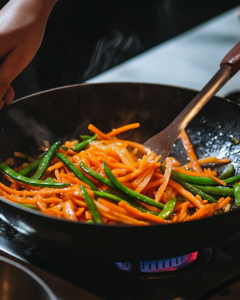
Why Shrimp Is Ideal for Quick Weeknight Cooking
Shrimp is one of the most efficient proteins for home cooks. It requires minimal prep, cooks in minutes, and absorbs flavors beautifully. Unlike other proteins that need longer cooking times or marinating, shrimp can go from raw to perfectly cooked in under five minutes.
In this recipe, shrimp are cooked separately to maintain their tenderness. This technique ensures they are not overexposed to heat when combined with noodles and sauce. The result is shrimp that are juicy, flavorful, and evenly cooked every time.
Customizing This Shrimp Lo Mein to Suit Your Taste
One of the best aspects of this recipe is its adaptability. You can easily modify it to suit dietary needs or personal preferences.
-
Add more vegetables such as broccoli, mushrooms, bok choy, or shredded cabbage.
-
Adjust the sauce by reducing soy sauce slightly or increasing brown sugar for a sweeter profile.
-
Increase protein by adding extra shrimp for a heartier dish.
-
Change noodle type if lo mein noodles are unavailable.
These small adjustments allow you to make the recipe your own while keeping its core flavors intact.
Frequently Asked Questions
1. Can I use frozen shrimp for this recipe?
Yes, frozen shrimp work very well for shrimp lo mein when prepared correctly. Thaw them overnight in the refrigerator or quickly in a bowl of cold water. Once thawed, pat them completely dry. This step is crucial, as excess moisture can prevent proper searing and dilute the sauce. Properly thawed shrimp cook quickly and deliver excellent texture and flavor in this dish.
2. What vegetables are best for lo mein?
Lo mein is highly versatile when it comes to vegetables. Carrots, bell peppers, snow peas, broccoli, mushrooms, and cabbage are all excellent choices. The key is to cut vegetables into similar sizes and cook firmer vegetables first. This ensures even cooking and balanced texture throughout the dish.
3. How do I keep noodles from sticking together?
To prevent sticking, avoid overcooking the noodles and drain them thoroughly. Tossing them lightly with oil can also help. When adding them to the pan, keep the heat high and toss continuously so they absorb sauce evenly without clumping.
4. Is shrimp lo mein good for meal prep?
Shrimp lo mein can be prepared ahead of time, but it’s best enjoyed fresh. If storing leftovers, keep them in an airtight container in the refrigerator for up to two days. Reheat gently on the stove with a splash of water to restore moisture. Avoid reheating too long to prevent shrimp from becoming tough.
Serving Suggestions for a Complete Meal
This shrimp lo mein is satisfying on its own, but it pairs well with light side dishes. A crisp cucumber salad, steamed vegetables, or a simple soup can complement the noodles without overpowering them. Serving it family-style encourages sharing and makes the meal feel relaxed and inviting.
Final Thoughts
Better Than Takeout Quick Shrimp Lo Mein is more than just a convenient dinner option. It’s a recipe that proves home cooking can be both efficient and deeply satisfying. With thoughtful preparation and simple techniques, this dish delivers bold flavors and comforting textures that rival restaurant versions.
What makes this recipe truly special is its reliability. It works on hectic weeknights, adapts to what you have on hand, and consistently delivers great results. Over time, it becomes a trusted favorite, one that you can prepare almost without thinking while still enjoying every bite.
Cooking this dish also offers a sense of accomplishment. The aromas of garlic and ginger, the sizzle of shrimp in the pan, and the final toss of noodles all contribute to a rewarding experience. This shrimp lo mein isn’t just about feeding yourself or your family—it’s about creating a moment of comfort and satisfaction in the middle of a busy life. Once you make it, you’ll understand why it truly earns its place as a weeknight win.
PrintBetter Than Takeout Quick Shrimp Lo Mein Weeknight Win
A fast, flavorful noodle dish made with tender shrimp, crisp vegetables, and a savory homemade sauce that comes together quickly and effortlessly.
- Prep Time: 10 minutes
- Cook Time: 15 minutes
- Total Time: 25 minutes
- Yield: 4 servings
Ingredients
-
Lo mein noodles – 12 ounces (340 g)
-
Raw shrimp, peeled and deveined – 1 pound (450 g)
-
Vegetable oil – 2 tablespoons
-
Garlic, minced – 4 cloves
-
Fresh ginger, grated – 1 tablespoon
-
Carrots, julienned – 1 cup (120 g)
-
Bell pepper, thinly sliced – 1 cup (150 g)
-
Snow peas – 1 cup (100 g)
-
Green onions, sliced – 3 stalks
Sauce
-
Low-sodium soy sauce – 1/3 cup (80 ml)
-
Oyster sauce – 2 tablespoons
-
Sesame oil – 1 teaspoon
-
Brown sugar – 1 tablespoon
-
Cornstarch – 1 teaspoon
-
Water – 2 tablespoons
Instructions
-
Cook lo mein noodles according to package instructions. Drain and set aside.
-
Heat 1 tablespoon oil in a large skillet over medium-high heat.
-
Cook shrimp for 1–2 minutes per side until just done. Remove and set aside.
-
Add remaining oil, then garlic and ginger. Cook for 30 seconds.
-
Add vegetables and stir-fry for 2–3 minutes.
-
Whisk sauce ingredients together.
-
Add noodles and sauce to the pan. Toss to coat evenly.
-
Return shrimp to the pan and cook 1–2 minutes until heated through.
-
Garnish with green onions and serve immediately.
Notes
-
Avoid overcooking shrimp to keep them tender.
-
Adjust sauce quantities to taste.
-
Best enjoyed fresh, but leftovers keep well refrigerated for up to two days.