Ultimate Gordon Ramsay Homemade Pasta Master Chef Secret

Posted on February 10, 2026

Difficulty

Prep time

Cooking time

Total time

Servings

Homemade pasta is one of those rare dishes that feels both humble and luxurious at the same time. It doesn’t rely on rare ingredients or complicated equipment, yet it delivers an experience that instantly elevates any meal. This is the kind of recipe that belongs to slow afternoons, family Sundays, or moments when you want to reconnect with the joy of cooking. Making pasta from scratch transforms the kitchen into a calm, purposeful space where each movement has meaning—from mixing flour and eggs to rolling the dough paper-thin.

The inspiration behind this recipe comes from the philosophy popularized by Gordon Ramsay: master the fundamentals, respect ingredients, and let technique do the work. In professional kitchens, pasta is not treated as a shortcut or filler—it is a craft. Dough is kneaded with precision, rested with patience, and rolled with confidence. This recipe brings that master-chef mindset into your home kitchen, giving you a foundation that will change how you approach Italian-style cooking forever.


The Philosophy Behind Great Homemade Pasta

Great pasta is not about speed. It’s about balance—between softness and structure, richness and restraint. Fresh pasta should feel delicate on the tongue while still offering a gentle bite. Achieving that texture requires understanding how ingredients interact and why each step matters.

Flour provides structure, eggs create richness and elasticity, and resting time allows gluten to relax. When these elements work together, the dough becomes smooth, pliable, and forgiving. This recipe focuses on that harmony, ensuring consistent results whether it’s your first attempt or your fiftieth.

Unlike dried pasta, fresh pasta absorbs sauces differently. It doesn’t fight the flavors—it welcomes them. Even the simplest preparation feels elevated because the pasta itself carries depth and character.

Why This Gordon Ramsay–Style Method Stands Out

This method emphasizes technique over shortcuts. Instead of relying on excessive flour or overworking the dough, it teaches control and awareness. The result is pasta that feels light, balanced, and professional.

Key characteristics of this approach include:

  • Precise ingredient ratios

  • Intentional kneading rather than aggressive handling

  • Mandatory resting time

  • Thin, even rolling for uniform cooking

Once you understand these principles, you can adapt the dough to countless variations, shapes, and fillings.


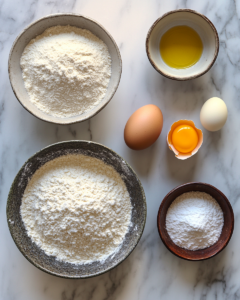
Ingredients for Homemade Pasta Dough

Measured ingredients ensure accuracy and repeatable success.

  • All-purpose flour – 2 cups (240 g), plus extra for dusting

  • Fine semolina flour – ½ cup (80 g)

  • Large eggs – 3

  • Egg yolk – 1

  • Olive oil – 1 tablespoon

  • Fine sea salt – ½ teaspoon

Why These Ingredients Matter

  • All-purpose flour provides flexibility and softness.

  • Semolina flour adds structure and a subtle bite.

  • Eggs and egg yolk enrich the dough and enhance elasticity.

  • Olive oil smooths the dough and improves mouthfeel.

  • Salt seasons the pasta from within, not just on the surface.

Essential Tools for Best Results

You don’t need a professional kitchen to make great pasta, but a few tools help ensure success:

  • Large clean countertop or wooden board

  • Fork for initial mixing

  • Bench scraper or sharp knife

  • Rolling pin or pasta machine

  • Clean kitchen towels or plastic wrap

Rolling by hand builds intuition, while a pasta machine offers consistency. Both methods work beautifully.


Step-by-Step Instructions

1. Creating the Dough Base

On a clean surface, combine the all-purpose flour and semolina flour into a mound. Form a wide well in the center, making sure the walls are thick enough to hold liquid. Add the eggs, egg yolk, olive oil, and salt into the well.

Using a fork, gently beat the eggs while gradually incorporating flour from the edges. Take your time—this prevents breakage and ensures even hydration. When the mixture becomes thick and shaggy, switch to using your hands.


2. Kneading with Control

Bring the dough together into a rough ball. Begin kneading by pushing the dough forward with the heel of your hand, folding it back over itself, rotating slightly, and repeating.

Knead for 8–10 minutes. The dough should evolve from rough and uneven into smooth, elastic, and cohesive. It should spring back slightly when pressed.

If the dough feels sticky, dust lightly with flour. If it feels dry or crumbly, lightly moisten your hands and continue kneading.


3. Resting the Dough

Wrap the dough tightly in plastic wrap or cover it with an inverted bowl. Allow it to rest at room temperature for at least 30 minutes.

This step is essential. Resting relaxes the gluten, making the dough easier to roll and preventing it from shrinking back. Skipping this step results in tough, resistant dough.


4. Dividing and Preparing to Roll

After resting, divide the dough into four equal portions. Work with one piece at a time, keeping the others covered to prevent drying.

Flatten the dough slightly with your hand before rolling. Lightly dust with flour as needed, but avoid excess.


5. Rolling the Dough Thin

If using a rolling pin, roll from the center outward, rotating frequently to maintain an even shape. Aim for a thickness thin enough to see your hand through the dough without tearing.

If using a pasta machine, start on the widest setting and gradually move to thinner settings. Fold and re-roll once or twice during the first passes to strengthen the dough.


6. Cutting and Shaping the Pasta

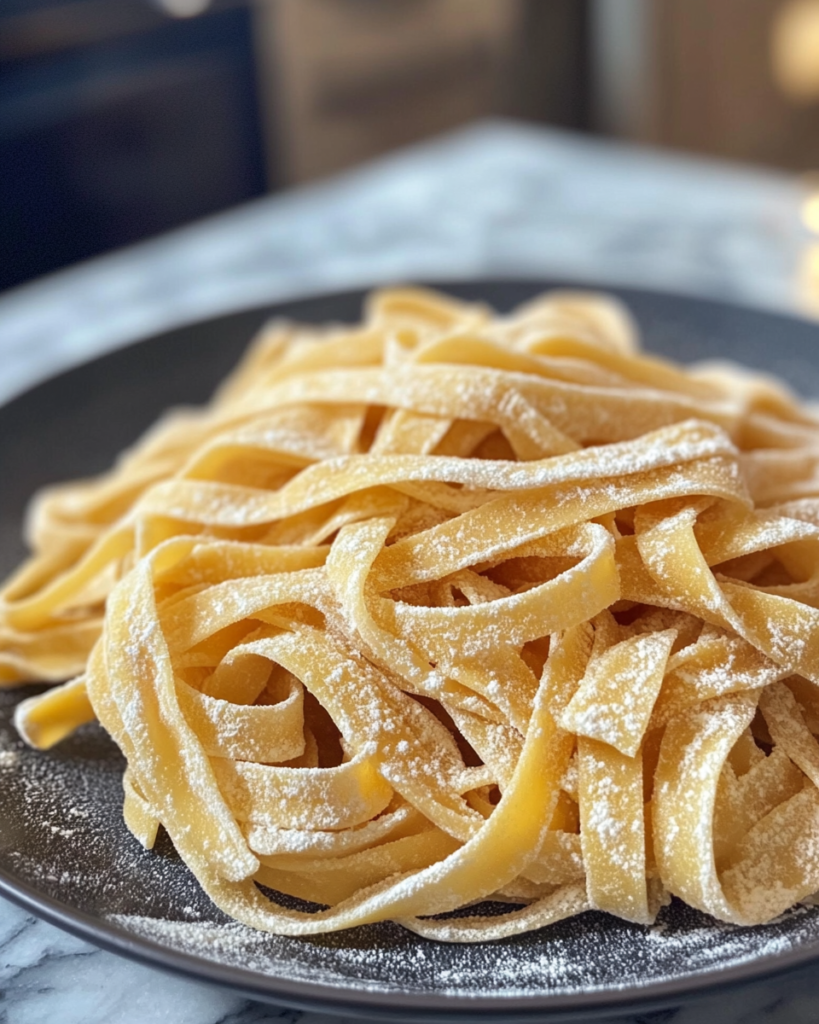
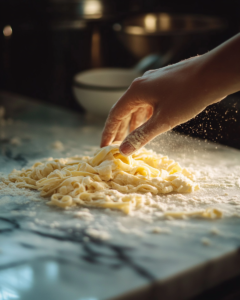
Lightly dust the rolled dough sheet with flour. Fold it gently without pressing, then cut into your desired width using a sharp knife or cutter.

Unfold the strands and toss lightly with flour to prevent sticking. Arrange in loose nests or lay flat on a floured surface.


7. Cooking Fresh Pasta

Bring a large pot of water to a rolling boil and season generously with salt. Add the pasta and stir gently to separate strands.

Fresh pasta cooks quickly—usually within 2–3 minutes. Taste early and remove as soon as it is tender with a gentle bite.

Drain and serve immediately.

Advanced Techniques for Consistency

  • Roll dough evenly to avoid uneven cooking

  • Keep unused dough covered at all times

  • Use minimal flour when rolling to maintain hydration

  • Always rely on texture, not just timing


Frequently Asked Questions

1. Is homemade pasta worth the effort compared to store-bought?

Yes, absolutely. While it requires time and attention, the difference in texture, flavor, and overall experience is undeniable. Homemade pasta offers a tenderness and freshness that dried pasta simply cannot replicate. Once you taste the difference, it becomes difficult to go back.

2. What causes pasta dough to tear while rolling?

Tearing usually occurs when the dough is too dry or rolled too thin too quickly. Ensure the dough is properly hydrated and rested before rolling. If tearing happens, fold the dough over itself, lightly dust with flour, and roll again.

3. Can this dough be used for filled pasta?

Yes. This dough is excellent for filled pasta because it rolls thin without tearing and seals well. Just ensure fillings are smooth and not overly wet to prevent leaks during cooking.

4. How long can fresh pasta sit before cooking?

Fresh pasta can sit lightly dusted with flour for up to 30 minutes at room temperature. For longer storage, freeze it. Avoid refrigerating raw pasta, as moisture can affect texture.


Serving Suggestions

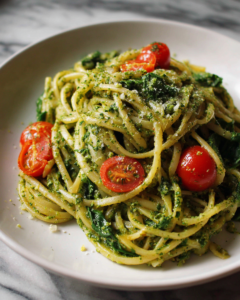
This pasta pairs beautifully with simple preparations that allow its texture to shine. Light tomato sauces, vegetable-based sauces, or gentle cheese-forward sauces are ideal. Fresh herbs, roasted vegetables, and subtle aromatics complement without overwhelming.

Avoid heavy, overly thick sauces that mask the pasta’s natural elegance.


The Emotional Side of Making Pasta

Homemade pasta is more than a recipe—it’s an experience. The act of kneading dough connects you to centuries of tradition. Rolling it thin teaches patience. Cooking it quickly rewards your effort almost instantly.

There is pride in serving something made entirely by hand. It turns meals into moments and invites people to slow down, savor, and appreciate simplicity done well.


Final Thoughts

Learning to make homemade pasta using this Gordon Ramsay–style method is a turning point for many home cooks. It teaches discipline, awareness, and confidence. The process may seem detailed at first, but with practice, it becomes intuitive and deeply satisfying.

Each batch improves as you develop a feel for the dough—how it should look, how it should stretch, how it should respond under your hands. This is when cooking moves beyond following instructions and becomes true craftsmanship.

Homemade pasta encourages mindfulness. It reminds us that great food doesn’t require excess—it requires care. Whether you’re cooking for loved ones or for yourself, this recipe offers a foundation that can grow with you, adapting to seasons, moods, and creativity.

In the end, this pasta is not just something you make. It’s something you learn, refine, and return to again and again. It becomes part of your kitchen identity—a quiet, confident skill that elevates everything it touches.

Print

Ultimate Gordon Ramsay Homemade Pasta Master Chef Secret
5 Stars 4 Stars 3 Stars 2 Stars 1 Star

No reviews

A refined, technique-focused fresh pasta recipe designed to deliver silky texture and professional results using simple ingredients.

  • Prep Time: 10 minutes
  • Cook Time: 0 minutes
  • Total Time: 10 minutes
  • Yield: 4 servings

Ingredients

  • All-purpose flour – 2 cups (240 g)

  • Fine semolina flour – ½ cup (80 g)

  • Large eggs – 3

  • Egg yolk – 1

  • Olive oil – 1 tablespoon

  • Fine sea salt – ½ teaspoon

Instructions

  • Combine flours and form a well on a clean surface.

  • Add eggs, egg yolk, olive oil, and salt; mix gradually.

  • Knead for 8–10 minutes until smooth and elastic.

  • Rest dough for 30 minutes at room temperature.

  • Roll thin, cut into desired shapes, and dust lightly with flour.

  • Cook in boiling salted water for 2–3 minutes until tender.

Notes

Resting the dough is essential for elasticity and ease of rolling. Fresh pasta cooks very quickly, so monitor closely and serve immediately for the best texture.

Did you make this recipe?

Share a photo and tag us — we can't wait to see what you've made!

[rank_math_breadcrumb]

Ultimate Gordon Ramsay Homemade Pasta Master Chef Secret

Photo of author
Author: Dana VA
Published:

Homemade pasta is one of those rare dishes that feels both humble and luxurious at the same time. It doesn’t rely on rare ingredients or complicated equipment, yet it delivers an experience that instantly elevates any meal. This is the kind of recipe that belongs to slow afternoons, family Sundays, or moments when you want to reconnect with the joy of cooking. Making pasta from scratch transforms the kitchen into a calm, purposeful space where each movement has meaning—from mixing flour and eggs to rolling the dough paper-thin.

The inspiration behind this recipe comes from the philosophy popularized by Gordon Ramsay: master the fundamentals, respect ingredients, and let technique do the work. In professional kitchens, pasta is not treated as a shortcut or filler—it is a craft. Dough is kneaded with precision, rested with patience, and rolled with confidence. This recipe brings that master-chef mindset into your home kitchen, giving you a foundation that will change how you approach Italian-style cooking forever.


The Philosophy Behind Great Homemade Pasta

Great pasta is not about speed. It’s about balance—between softness and structure, richness and restraint. Fresh pasta should feel delicate on the tongue while still offering a gentle bite. Achieving that texture requires understanding how ingredients interact and why each step matters.

Flour provides structure, eggs create richness and elasticity, and resting time allows gluten to relax. When these elements work together, the dough becomes smooth, pliable, and forgiving. This recipe focuses on that harmony, ensuring consistent results whether it’s your first attempt or your fiftieth.

Unlike dried pasta, fresh pasta absorbs sauces differently. It doesn’t fight the flavors—it welcomes them. Even the simplest preparation feels elevated because the pasta itself carries depth and character.


Why This Gordon Ramsay–Style Method Stands Out

This method emphasizes technique over shortcuts. Instead of relying on excessive flour or overworking the dough, it teaches control and awareness. The result is pasta that feels light, balanced, and professional.

Key characteristics of this approach include:

  • Precise ingredient ratios

  • Intentional kneading rather than aggressive handling

  • Mandatory resting time

  • Thin, even rolling for uniform cooking

Once you understand these principles, you can adapt the dough to countless variations, shapes, and fillings.


Ingredients for Homemade Pasta Dough

Measured ingredients ensure accuracy and repeatable success.

  • All-purpose flour – 2 cups (240 g), plus extra for dusting

  • Fine semolina flour – ½ cup (80 g)

  • Large eggs – 3

  • Egg yolk – 1

  • Olive oil – 1 tablespoon

  • Fine sea salt – ½ teaspoon

Why These Ingredients Matter

  • All-purpose flour provides flexibility and softness.

  • Semolina flour adds structure and a subtle bite.

  • Eggs and egg yolk enrich the dough and enhance elasticity.

  • Olive oil smooths the dough and improves mouthfeel.

  • Salt seasons the pasta from within, not just on the surface.


Essential Tools for Best Results

You don’t need a professional kitchen to make great pasta, but a few tools help ensure success:

  • Large clean countertop or wooden board

  • Fork for initial mixing

  • Bench scraper or sharp knife

  • Rolling pin or pasta machine

  • Clean kitchen towels or plastic wrap

Rolling by hand builds intuition, while a pasta machine offers consistency. Both methods work beautifully.


Step-by-Step Instructions

1. Creating the Dough Base

On a clean surface, combine the all-purpose flour and semolina flour into a mound. Form a wide well in the center, making sure the walls are thick enough to hold liquid. Add the eggs, egg yolk, olive oil, and salt into the well.

Using a fork, gently beat the eggs while gradually incorporating flour from the edges. Take your time—this prevents breakage and ensures even hydration. When the mixture becomes thick and shaggy, switch to using your hands.


2. Kneading with Control

Bring the dough together into a rough ball. Begin kneading by pushing the dough forward with the heel of your hand, folding it back over itself, rotating slightly, and repeating.

Knead for 8–10 minutes. The dough should evolve from rough and uneven into smooth, elastic, and cohesive. It should spring back slightly when pressed.

If the dough feels sticky, dust lightly with flour. If it feels dry or crumbly, lightly moisten your hands and continue kneading.


3. Resting the Dough

Wrap the dough tightly in plastic wrap or cover it with an inverted bowl. Allow it to rest at room temperature for at least 30 minutes.

This step is essential. Resting relaxes the gluten, making the dough easier to roll and preventing it from shrinking back. Skipping this step results in tough, resistant dough.


4. Dividing and Preparing to Roll

After resting, divide the dough into four equal portions. Work with one piece at a time, keeping the others covered to prevent drying.

Flatten the dough slightly with your hand before rolling. Lightly dust with flour as needed, but avoid excess.


5. Rolling the Dough Thin

If using a rolling pin, roll from the center outward, rotating frequently to maintain an even shape. Aim for a thickness thin enough to see your hand through the dough without tearing.

If using a pasta machine, start on the widest setting and gradually move to thinner settings. Fold and re-roll once or twice during the first passes to strengthen the dough.


6. Cutting and Shaping the Pasta

Lightly dust the rolled dough sheet with flour. Fold it gently without pressing, then cut into your desired width using a sharp knife or cutter.

Unfold the strands and toss lightly with flour to prevent sticking. Arrange in loose nests or lay flat on a floured surface.


7. Cooking Fresh Pasta

Bring a large pot of water to a rolling boil and season generously with salt. Add the pasta and stir gently to separate strands.

Fresh pasta cooks quickly—usually within 2–3 minutes. Taste early and remove as soon as it is tender with a gentle bite.

Drain and serve immediately.


Advanced Techniques for Consistency

  • Roll dough evenly to avoid uneven cooking

  • Keep unused dough covered at all times

  • Use minimal flour when rolling to maintain hydration

  • Always rely on texture, not just timing


Frequently Asked Questions

1. Is homemade pasta worth the effort compared to store-bought?

Yes, absolutely. While it requires time and attention, the difference in texture, flavor, and overall experience is undeniable. Homemade pasta offers a tenderness and freshness that dried pasta simply cannot replicate. Once you taste the difference, it becomes difficult to go back.

2. What causes pasta dough to tear while rolling?

Tearing usually occurs when the dough is too dry or rolled too thin too quickly. Ensure the dough is properly hydrated and rested before rolling. If tearing happens, fold the dough over itself, lightly dust with flour, and roll again.

3. Can this dough be used for filled pasta?

Yes. This dough is excellent for filled pasta because it rolls thin without tearing and seals well. Just ensure fillings are smooth and not overly wet to prevent leaks during cooking.

4. How long can fresh pasta sit before cooking?

Fresh pasta can sit lightly dusted with flour for up to 30 minutes at room temperature. For longer storage, freeze it. Avoid refrigerating raw pasta, as moisture can affect texture.


Serving Suggestions

This pasta pairs beautifully with simple preparations that allow its texture to shine. Light tomato sauces, vegetable-based sauces, or gentle cheese-forward sauces are ideal. Fresh herbs, roasted vegetables, and subtle aromatics complement without overwhelming.

Avoid heavy, overly thick sauces that mask the pasta’s natural elegance.


The Emotional Side of Making Pasta

Homemade pasta is more than a recipe—it’s an experience. The act of kneading dough connects you to centuries of tradition. Rolling it thin teaches patience. Cooking it quickly rewards your effort almost instantly.

There is pride in serving something made entirely by hand. It turns meals into moments and invites people to slow down, savor, and appreciate simplicity done well.


Final Thoughts

Learning to make homemade pasta using this Gordon Ramsay–style method is a turning point for many home cooks. It teaches discipline, awareness, and confidence. The process may seem detailed at first, but with practice, it becomes intuitive and deeply satisfying.

Each batch improves as you develop a feel for the dough—how it should look, how it should stretch, how it should respond under your hands. This is when cooking moves beyond following instructions and becomes true craftsmanship.

Homemade pasta encourages mindfulness. It reminds us that great food doesn’t require excess—it requires care. Whether you’re cooking for loved ones or for yourself, this recipe offers a foundation that can grow with you, adapting to seasons, moods, and creativity.

In the end, this pasta is not just something you make. It’s something you learn, refine, and return to again and again. It becomes part of your kitchen identity—a quiet, confident skill that elevates everything it touches.

Print

Ultimate Gordon Ramsay Homemade Pasta Master Chef Secret

5 Stars 4 Stars 3 Stars 2 Stars 1 Star

No reviews

A refined, technique-focused fresh pasta recipe designed to deliver silky texture and professional results using simple ingredients.

  • Prep Time: 10 minutes
  • Cook Time: 0 minutes
  • Total Time: 10 minutes
  • Yield: 4 servings

Ingredients

  • All-purpose flour – 2 cups (240 g)

  • Fine semolina flour – ½ cup (80 g)

  • Large eggs – 3

  • Egg yolk – 1

  • Olive oil – 1 tablespoon

  • Fine sea salt – ½ teaspoon

Instructions

  • Combine flours and form a well on a clean surface.

  • Add eggs, egg yolk, olive oil, and salt; mix gradually.

  • Knead for 8–10 minutes until smooth and elastic.

  • Rest dough for 30 minutes at room temperature.

  • Roll thin, cut into desired shapes, and dust lightly with flour.

  • Cook in boiling salted water for 2–3 minutes until tender.

Notes

Resting the dough is essential for elasticity and ease of rolling. Fresh pasta cooks very quickly, so monitor closely and serve immediately for the best texture.
Did you make this recipe?

Share a photo and tag us — we can't wait to see what you've made!

Name

Lorem ipsum dolor sit amet, consectetur adipiscing elit. Suspendisse varius enim in eros elementum tristique. Duis cursus, mi quis viverra ornare, eros dolor interdum nulla, ut commodo diam libero vitae erat.

You Might Also Like...

Flavor-Packed Green Goddess Pesto Pasta Explosion

Flavor-Packed Green Goddess Pesto Pasta Explosion

Savory Loaded Herb Grilled Chicken with Creamy Pesto Pasta & Roasted Potatoes Feast

Savory Loaded Herb Grilled Chicken with Creamy Pesto Pasta & Roasted Potatoes Feast

Easy Quick & Easy Lasagna Wonder

Easy Quick & Easy Lasagna Wonder

Comforting Pasta Sausage Delight

Comforting Pasta Sausage Delight

Tags:

You might also like these recipes

Leave a Comment

Recipe rating 5 Stars 4 Stars 3 Stars 2 Stars 1 Star